The Evolution of Horror Cinema: From Scream to Scream 7
How Wes Craven's 1996 meta-horror masterpiece revolutionized the genre and paved the way for three decades of intelligent, self-aware filmmaking.
A Genre Reborn Through Self-Awareness
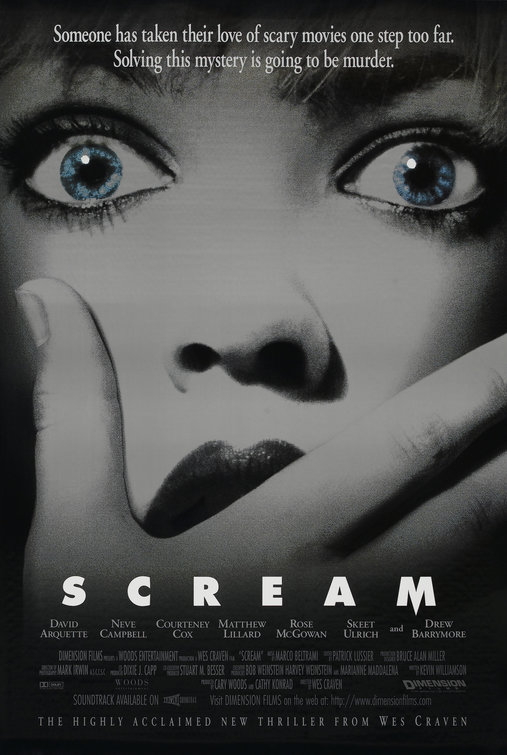
In December 1996, a masked killer picked up a phone and asked a question that would forever change horror cinema: “Do you like scary movies?” Wes Craven’s Scream didn’t just revive the moribund slasher genre—it rewired how audiences engage with horror, transforming passive viewers into active participants in a deadly game of genre literacy. Three decades later, as Scream 7 hits theaters in 2026, the franchise’s influence permeates every corner of modern horror, from A24’s “elevated” psychological thrillers to mainstream blockbusters that assume their audiences are as film-savvy as the characters on screen.
The journey from Scream to Scream 7 isn’t merely the story of a successful franchise. It shows how horror cinema evolved from formulaic jump scares to intellectually engaging art, how meta-commentary became mainstream, and how a single film’s willingness to mock and celebrate its genre simultaneously created space for horror to be taken seriously as cultural commentary.
1996: The Year Horror Got Smart
To understand Scream’s revolutionary impact, we must first acknowledge the wasteland it emerged from. By the mid-1990s, horror had devolved into a parade of direct-to-video sequels, uninspired remakes, and formulaic slashers that insulted audience intelligence. The genre that had produced Psycho, The Exorcist, and Halloween was suffocating under the weight of its own tired conventions.
Enter Kevin Williamson’s screenplay and Wes Craven’s direction, which dared to do something radical: respect the audience. Scream acknowledged that modern viewers had seen every horror movie, knew every trope, and could predict every scare. Rather than pretend otherwise, the film made that knowledge the foundation of its narrative architecture.
The opening sequence—Drew Barrymore’s Casey Becker receiving that infamous phone call—established the template. Ghostface doesn’t just terrorize Casey; he quizzes her on horror movie trivia. When she fails to correctly identify the killer in Friday the 13th, she pays with her boyfriend’s life. The message was clear: in this universe, your survival depends on your film literacy.
But Scream wasn’t merely clever—it was genuinely terrifying. Craven understood that meta-commentary only works if the stakes feel real. Sidney Prescott, played with raw vulnerability by Neve Campbell, wasn’t a cardboard final girl waiting to be chased. She was a complex young woman processing trauma, navigating relationships, and ultimately refusing to be a victim. Craven managed to deconstruct horror conventions while simultaneously deploying them with brutal effectiveness.
Randy Meeks, the video store clerk played by Jamie Kennedy, became the franchise’s Greek chorus, explicitly laying out “the rules” for surviving a horror movie: don’t have sex, don’t drink or do drugs, and never say “I’ll be right back.” These weren’t just jokes—they were the film teaching audiences to watch actively, to anticipate and subvert expectations. When characters violated the rules, we felt complicit in their deaths. When they survived by following them, we celebrated their genre savvy.
The Death and Rebirth of Horror Tropes
Pre-Scream horror operated on autopilot. Teenagers investigated strange noises alone. Final girls were virginal and pure. Killers possessed superhuman resilience. Sequels followed predictable formulas. Audiences tolerated these conventions because, well, that’s just how horror movies worked.
Scream didn’t eliminate these tropes—it weaponized them. By having characters explicitly discuss horror movie logic, the film created a double-edged sword. When Sidney’s boyfriend Billy climbs through her window, both she and the audience immediately think of Nightmare on Elm Street. When the killer seems dead but isn’t, Randy literally warns everyone not to assume the threat is over. The film transformed clichés into narrative tools, making the familiar feel fresh through acknowledgment.
This approach forced horror filmmakers to evolve. Post-Scream, you couldn’t simply recycle old formulas without audiences noticing. The genre split into two camps: films that embraced self-awareness (the Scream sequels, Cabin in the Woods, Happy Death Day) and films that worked harder to subvert expectations through genuine innovation.
The final girl trope underwent particular transformation. Sidney Prescott wasn’t defined by her virginity or purity—she was popular, sexually active, and complex. Her survival stemmed from intelligence, resilience, and emotional depth rather than moral superiority. This opened doors for more nuanced female protagonists in horror, from The Descent’s Sarah to You’re Next’s Erin.
Meta-Horror as Mainstream Language
What seemed revolutionary in 1996 is now horror’s default mode. Modern genre films routinely feature characters who understand horror movie logic, reference other films, and comment on their own narratives. The meta-horror language Scream pioneered has become so ubiquitous that it’s almost invisible.
But the Scream franchise itself continued to evolve its meta-commentary with each installment. Scream 2 (1997) tackled sequels and the media’s exploitation of tragedy. Scream 3 (2000) satirized Hollywood and trilogy conventions. After an 11-year hiatus, Scream 4 (2011) confronted the remake era, social media fame, and how trauma becomes content in the digital age.
The 2022 Scream (often called Scream 5) introduced the concept of the “requel”—a sequel that functions as a soft reboot, honoring legacy characters while introducing new protagonists. The film’s commentary on toxic fandom, with killers motivated by rage over “elevated horror” ruining their beloved franchise, felt eerily prescient. When the new final girl explains that elevated horror features “complex emotional and thematic underpinnings, not just some schlocky cheeseball nonsense,” and Ghostface dismisses The Babadook as “boring” and “fancy pants,” the franchise was directly engaging with how horror’s evolution had created cultural divisions.
This self-awareness extends beyond the Scream franchise. Films like The Cabin in the Woods (2012) deconstructed horror at a structural level, revealing the genre’s mechanics as literal machinery. Happy Death Day (2017) blended slasher conventions with time-loop narratives. Freaky (2020) mashed up body-swap comedy with serial killer horror. All of these films assume audiences are sophisticated enough to appreciate genre play while still delivering genuine scares.
The Scream effect: how one franchise changed everything
The Scream franchise’s influence goes far beyond meta-horror. By proving that intelligent, self-aware horror could be both critically acclaimed and commercially successful, it legitimized the genre in ways that reverberate today.
First, it demonstrated that horror audiences are smart. The condescending assumption that genre fans want mindless gore and predictable scares was shattered. This paved the way for horror films that tackle complex themes—grief in The Babadook, racism in Get Out, class warfare in Parasite, trauma in Hereditary.
Second, it revived the slasher subgenre. The late ’90s and early 2000s saw a wave of teen-focused horror: I Know What You Did Last Summer, Urban Legend, Final Destination, and eventually the Saw and Hostel franchises. While not all embraced Scream’s meta-approach, they benefited from its commercial success and renewed interest in theatrical horror.
Third, it established that horror franchises could evolve rather than stagnate. Each Scream film updates its commentary for contemporary audiences, addressing current anxieties and media landscapes. This model influenced how other franchises approached longevity—the Halloween reboot trilogy, for instance, grapples with trauma and legacy in ways that feel distinctly post-Scream.
Fourth, it made room for “prestige horror.” By treating the genre with intellectual respect, Scream helped normalize the idea that horror could be artistically ambitious. This cultural shift enabled the rise of what critics call “elevated horror”—films that use genre conventions to explore deeper themes.
The Modern Horror Landscape: Elevated, Psychological, and Self-Aware
Today’s horror landscape is unrecognizable from the mid-’90s wasteland. The genre now encompasses everything from A24’s arthouse psychological thrillers to mainstream blockbusters that gross hundreds of millions globally. And much of this diversity traces back to the doors Scream opened.
The rise of “elevated horror” represents perhaps the most significant post-Scream evolution. Studios like A24 have built reputations on horror films that prioritize atmosphere, character psychology, and thematic depth over jump scares. The Witch (2015), Hereditary (2018), and Midsommar (2019) explore grief, family trauma, and toxic relationships through horror frameworks. These films assume audiences want to be disturbed rather than merely startled, unsettled rather than simply scared.
This shift from external monsters to internal demons reflects Scream’s core insight: the most effective horror engages the mind as well as the nerves. Modern psychological horror like Smile (2022) and It (2017) performed better at the box office than traditional supernatural franchises, indicating audience preference for stories with emotional resonance.
Yet the genre hasn’t abandoned fun. The Scream sequels continue to balance genuine terror with dark humor. Films like M3GAN (2023) embrace camp while delivering social commentary. The horror-comedy hybrid has become a legitimate subgenre, from Ready or Not to Bodies Bodies Bodies, all descendants of Scream’s tonal balancing act.
Meanwhile, meta-horror has become so mainstream that films can be meta about being meta. The 2022 Scream features characters discussing “requels” and “elevated horror” with the same casual fluency that Randy once explained slasher rules. This recursive self-awareness could feel exhausting, but when executed well, it creates a shared language between filmmakers and audiences—a conversation rather than a lecture.
Scream 7: The Franchise Faces Its Future
When Scream 7 premiered on February 27, 2026, it represented both a homecoming and a reckoning. Neve Campbell returned as Sidney Prescott after sitting out Scream VI due to a pay dispute—a meta-narrative about valuing legacy characters that the franchise itself would likely comment on. Kevin Williamson, who wrote the original film, directed for the first time, bringing the series full circle.
The film’s premise—Ghostface targeting Sidney’s teenage daughter Tatum—forces the franchise to confront generational trauma and legacy. Sidney, who survived twelve killers across six films, must now protect a daughter named after her murdered best friend. It’s a premise that asks: can trauma ever truly end, or does it simply pass to the next generation?
Critical reception has been mixed, with some reviewers finding the plot convoluted and the meta-commentary exhausted. Yet audience scores remain high, and the film set a franchise record for opening weekend box office. This disconnect itself feels thematically appropriate—a franchise about the tension between critical respectability and popular appeal facing that exact divide.
The return of Matthew Lillard’s Stu Macher—one of the original Ghostface killers, presumed dead since 1996—represents the franchise’s willingness to break its own rules. If Scream taught us that genre conventions exist to be subverted, then why shouldn’t the franchise subvert its own mythology?
Scream 7 also grapples with what it means to make horror in 2026. The media landscape has fragmented beyond recognition since 1996. Streaming has replaced video stores. Social media has transformed how we process trauma and violence. True crime has become entertainment. The film attempts to address these shifts while maintaining the franchise’s core identity—a challenging balance that doesn’t always succeed but remains admirable in its ambition.
The enduring legacy: horror that respects its audience
Thirty years after that first phone call, Scream’s most important legacy isn’t its body count or its twist endings. It’s the respect it showed audiences. By assuming viewers were intelligent, film-literate, and capable of engaging with complex narratives, it elevated not just horror but popular cinema generally.
The evolution from Scream to Scream 7 mirrors horror’s journey from disreputable genre to culturally significant art form. Films like Get Out earn Oscar nominations. Horror directors like Jordan Peele and Ari Aster are treated as auteurs. The genre tackles racism, grief, class inequality, and trauma with sophistication that would have seemed impossible in 1996.
Yet for all this evolution, horror’s core appeal remains unchanged: the thrill of fear in a safe environment, the catharsis of surviving vicariously through characters, the communal experience of being scared together. Scream understood that you could be smart and scary, meta and terrifying, deconstructive and emotionally resonant.
As we look toward horror’s future, the Scream franchise reminds us that genres thrive through evolution, not stagnation. The films that endure are those willing to examine themselves, challenge their audiences, and take risks. Whether Scream 7 represents the franchise’s final chapter or merely another evolution remains to be seen. But the conversation it started three decades ago—about what horror can be, who it’s for, and how it reflects our deepest anxieties—continues to shape every scary movie that asks us, “Do you like scary movies?”
The answer, thirty years later, is more complicated and interesting than ever. We like scary movies that challenge us, that respect our intelligence, that use fear to explore deeper truths. We like scary movies that know we’ve seen every trick but still manage to surprise us. We like scary movies that understand the genre’s history while pushing toward its future.
In other words, we like scary movies that learned from Scream.