The Art of Adaptation: Analyzing Wuthering Heights' Cinematic Journey
An in-depth analysis of how Emily Brontë's gothic masterpiece has been translated to screen across generations, culminating in Emerald Fennell's provocative 2026 vision.
Introduction: the challenge of adapting classics
Translating beloved literary works to cinema has always been difficult, especially when balancing fidelity and innovation. Few novels present as formidable a challenge as Emily Brontë’s Wuthering Heights, a work that Victorian critics initially deemed too violent and disturbing for polite society. The novel’s complex narrative structure, its unflinching portrayal of obsessive passion, and its morally ambiguous characters resist easy cinematic interpretation. Yet filmmakers have returned to this windswept Yorkshire tale repeatedly, each generation finding new resonances in Brontë’s exploration of love, class, and revenge.
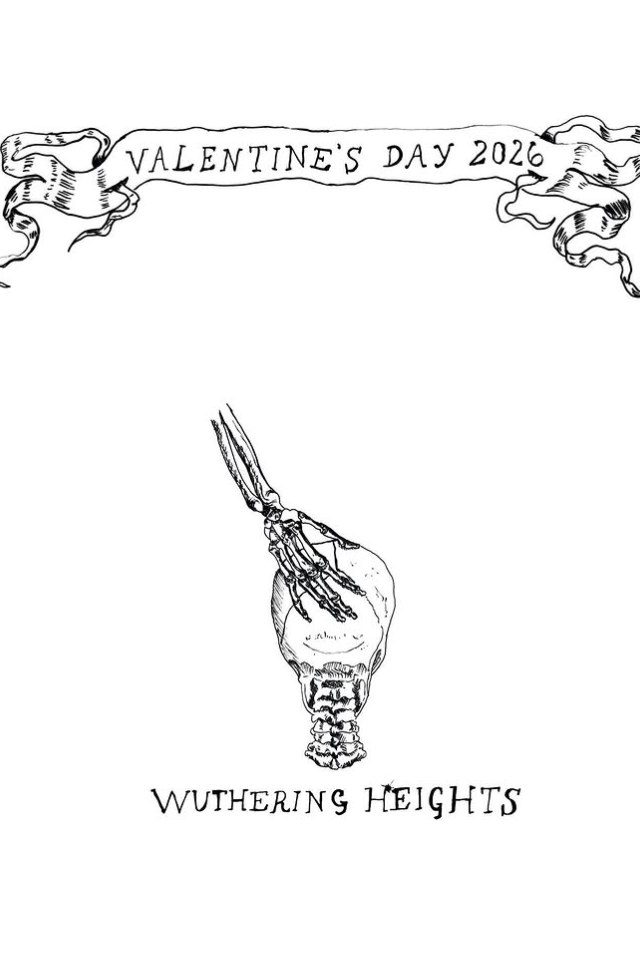
Emerald Fennell’s 2026 adaptation, starring Margot Robbie and Jacob Elordi, arrives at a moment when audiences have become increasingly sophisticated about adaptation as an art form. The film’s Valentine’s Day release and its reported “electrically erotic energy” signal a deliberate repositioning of the material for contemporary viewers. But to understand what Fennell’s version contributes to the cinematic legacy of Wuthering Heights, we must first examine both the source material’s enduring power and the varied approaches previous filmmakers have taken.
Emily Brontë’s original vision
Published in 1847 under the pseudonym Ellis Bell, Wuthering Heights was Emily Brontë’s only novel—a work of such intensity and psychological complexity that early reviewers struggled to comprehend it. The novel’s original subtitle might well have been “A Story of Hate,” as one 1920 silent film adaptation advertised, rather than the romance modern readers often expect. Brontë constructed a narrative that spans two generations, employing multiple narrators to create a deliberately fragmented perspective on events that unfold across decades.
At the heart of the novel lies the relationship between Catherine Earnshaw and Heathcliff, a bond that Catherine herself describes in terms that transcend conventional romance: “I am Heathcliff.” This declaration suggests not merely love but a fundamental ontological connection—a merging of identities that makes separation tantamount to self-destruction. Yet Brontë refuses to romanticize this connection. Heathcliff’s transformation from abused orphan to vengeful landowner drives the novel’s second half, where his cruelty toward the next generation reveals the corrosive effects of obsession and class resentment.
The Yorkshire moors function as more than mere setting in Brontë’s vision; they become a psychological landscape reflecting the characters’ turbulent emotions. The contrast between Wuthering Heights—the exposed, storm-battered farmhouse—and Thrushcross Grange—the sheltered valley estate—embodies the novel’s central tensions between nature and civilization, passion and propriety, the working class and the gentry.
History of Wuthering Heights adaptations
The cinematic history of Wuthering Heights reveals how each era has reimagined the novel according to its own cultural preoccupations. William Wyler’s 1939 adaptation, starring Laurence Olivier and Merle Oberon, established the template that would influence decades of subsequent versions. Wyler’s film, produced during Hollywood’s Golden Age, transformed Brontë’s dark psychological study into a sweeping romantic tragedy. Crucially, it eliminated the novel’s entire second half, ending with the deaths of Catherine and Heathcliff and their ghostly reunion on the moors.
This decision to excise Heathcliff’s revenge against the younger generation fundamentally altered the story’s meaning. The 1939 film presents Heathcliff as a wronged Romantic hero rather than the novel’s more complex figure—a man whose suffering breeds cruelty. As scholars have noted, this adaptation’s enormous commercial success worldwide established Wuthering Heights in the popular imagination as “the greatest love story of our time,” a characterization that would have baffled Victorian readers who found the novel disturbing and violent.
The 1967 BBC television adaptation, starring Ian McShane, achieved lasting cultural influence through an unexpected channel: it inspired Kate Bush’s 1978 single “Wuthering Heights,” which introduced the story to new generations and cemented its association with passionate, otherworldly romance. This adaptation’s legacy demonstrates how screen versions can generate cultural ripples far beyond their immediate viewership.
Timothy Dalton’s 1970 film marked a deliberate departure from Wyler’s romanticism. This version retained more of the novel’s unsavory elements, presenting characters whose moral ambiguity challenged audience sympathies. The cinematography emphasized the stark beauty of location shooting, using the landscape to underscore the story’s bleakness rather than its romance.
Peter Kosminsky’s 1992 adaptation, featuring Ralph Fiennes and Juliette Binoche, attempted a more comprehensive approach to the source material. Binoche played both Catherine Earnshaw and her daughter, emphasizing the generational parallels Brontë constructed. This version’s critical acclaim stemmed partly from its willingness to engage with the novel’s full scope, including Heathcliff’s systematic destruction of the younger generation.
Andrea Arnold’s 2011 film took perhaps the most radical approach, casting a Black actor (James Howson) as Heathcliff and emphasizing the novel’s themes of racial othering and class oppression. Arnold’s naturalistic style and focus on physical detail created a visceral, often uncomfortable viewing experience that many critics praised as the most accurate to Brontë’s unsentimental vision. The film’s reception demonstrated that fidelity to a novel’s themes might matter more than adherence to its surface details.
The 2026 adaptation’s approach
Emerald Fennell’s adaptation arrives with considerable cultural baggage and high expectations. Fresh from the success of Promising Young Woman and Saltburn, Fennell has established herself as a filmmaker drawn to stories that blend beauty with discomfort, desire with danger. Her stated obsession with the gothic—“a genre where comedy and horror, revulsion and desire, sex and death are forever entwined”—suggests an approach aligned with Brontë’s original sensibility.
The casting of Margot Robbie and Jacob Elordi signals both star power and a deliberate youth-oriented appeal. Elordi’s emergence as a contemporary heartthrob brings a different energy than previous Heathcliffs, while Robbie’s proven range as an actress suggests a Catherine who might capture both the character’s willfulness and her ultimate tragedy. The film’s reported emphasis on “electrically erotic energy” and its Valentine’s Day release date indicate a marketing strategy that leans into the popular conception of Wuthering Heights as a passionate romance.
Critical reception has been notably divided. The Guardian’s two-star review, calling the film an “emotionally hollow, bodice-ripping misfire,” suggests that Fennell’s stylistic flourishes may overwhelm the emotional core. Conversely, The Hollywood Reporter praised the leads’ “captivating chemistry” and described the film as “arguably the writer-director’s most purely entertaining film,” suggesting that Fennell has created something that works as cinema even if it departs from literary orthodoxy.
Fennell’s decision to accept Warner Bros.’ $80 million theatrical release over Netflix’s $150 million streaming offer reveals a commitment to the big-screen experience. This choice suggests confidence that the film’s visual and sensory elements require theatrical presentation—a “fever-dream adaptation” designed to overwhelm audiences in ways that small-screen viewing cannot replicate.
Thematic analysis: love, revenge, class
The enduring power of Wuthering Heights lies in its exploration of three interconnected themes that resonate across historical periods. The novel’s treatment of love as a destructive, all-consuming force challenges romantic conventions. Catherine’s declaration that “I am Heathcliff” suggests a connection that transcends individual identity, yet this very intensity proves fatal. Her decision to marry Edgar Linton for social advancement while maintaining her spiritual bond with Heathcliff creates an impossible situation that can only end in tragedy.
Successful adaptations must grapple with how to visualize this metaphysical connection. The 1939 film relied on the star power and chemistry of Olivier and Oberon, using close-ups and romantic cinematography to suggest depth of feeling. Arnold’s 2011 version took a more physical approach, emphasizing touch, breath, and bodily presence to convey the characters’ animal connection. Fennell’s reported emphasis on eroticism suggests yet another strategy—using sexual tension and desire as the visual language for spiritual union.
The theme of revenge drives the novel’s second half, as Heathcliff systematically destroys the families that rejected him. This aspect has proven most challenging for filmmakers, as it requires audiences to follow a protagonist who becomes increasingly monstrous. The 1939 film’s decision to eliminate this material entirely reflects Hollywood’s discomfort with morally complex protagonists. More recent adaptations have attempted to contextualize Heathcliff’s cruelty through emphasis on the class oppression and abuse he suffered, though this risks reducing the character’s agency.
Class conflict permeates every aspect of Brontë’s novel. Heathcliff’s ambiguous origins—described as a “dark-skinned” foundling speaking “gibberish”—mark him as racially and socially other in the rigid hierarchy of Victorian England. His transformation from degraded servant to wealthy gentleman exposes the arbitrary nature of class distinctions while simultaneously showing how internalized oppression breeds cruelty. Catherine’s choice to marry Edgar rather than Heathcliff is explicitly motivated by class considerations: “It would degrade me to marry Heathcliff now.”
The 2011 adaptation’s casting of a Black Heathcliff made these themes explicit in ways that resonated with contemporary discussions of race and power. Fennell’s version, while returning to white leads, reportedly emphasizes the visual contrast between the rough, exposed world of Wuthering Heights and the refined elegance of Thrushcross Grange, using production design and costume to underscore class divisions.
Cinematic techniques and symbolism
The challenge of adapting Wuthering Heights extends beyond narrative structure to the question of how to translate Brontë’s symbolic landscape into visual language. The novel’s use of the Yorkshire moors as both setting and psychological mirror has inspired varied cinematic approaches. Wyler’s 1939 film, shot in California, created a romanticized moorland that emphasized beauty over bleakness. Later adaptations, particularly those shot on location in Yorkshire, have used the landscape’s harsh beauty to underscore the story’s emotional violence.
The contrast between the two houses—Wuthering Heights and Thrushcross Grange—provides filmmakers with a ready-made visual metaphor for the novel’s thematic oppositions. Production design choices reveal each adaptation’s interpretive stance. Films that emphasize romance tend to make both houses relatively attractive, while those focusing on class conflict and psychological damage often render Wuthering Heights as genuinely oppressive and uncomfortable.
Fennell’s background in gothic storytelling suggests particular attention to visual symbolism. Her previous films have demonstrated a facility with using color, costume, and composition to create psychological unease beneath surfaces of beauty. Early responses to the 2026 adaptation mention its “fever-dream” quality, suggesting a heightened, possibly surreal visual approach that prioritizes emotional truth over realism.
The treatment of supernatural elements—particularly Catherine’s ghost—serves as another key interpretive choice. The novel leaves ambiguous whether Heathcliff actually sees Catherine’s spirit or whether his visions represent psychological breakdown. Film adaptations must decide whether to visualize the ghost, and if so, how to present her. The 1939 film’s ending, showing the ghosts of Catherine and Heathcliff walking together, opts for romantic literalism. More recent versions have tended toward ambiguity, using subjective camera work and sound design to suggest haunting without confirming supernatural presence.
What makes a successful adaptation
The varied critical and popular reception of different Wuthering Heights adaptations raises fundamental questions about what constitutes success in literary adaptation. Should fidelity to the source text be the primary criterion? Or should adaptations be judged on their effectiveness as cinema, regardless of how closely they follow the novel?
The 1939 film’s enduring popularity despite its significant departures from Brontë’s novel suggests that cinematic success and literary fidelity need not align. Wyler created a film that worked brilliantly within Hollywood’s romantic melodrama conventions, even as it fundamentally altered the source material’s meaning. Conversely, Arnold’s 2011 adaptation, widely praised by scholars as the most accurate to Brontë’s vision, achieved only modest commercial success and divided general audiences.
Perhaps the most successful adaptations are those that identify the core of what makes the source material powerful and find cinematic equivalents for literary techniques. Brontë’s use of multiple narrators and temporal shifts creates a sense of events viewed through layers of interpretation and memory. Film adaptations must find visual and structural ways to create similar effects—through flashback structures, voice-over narration, or subjective camera work.
The novel’s psychological intensity and its refusal of easy moral judgments require adaptations to trust audiences with complexity. Films that simplify characters into heroes and villains, or that soften the story’s violence and cruelty, may be more immediately accessible but lose the qualities that make Wuthering Heights enduringly powerful. The challenge lies in preserving difficulty while creating compelling cinema.
Fennell’s adaptation, based on early responses, appears to prioritize sensory and emotional impact over comprehensive narrative fidelity. This approach has precedent in successful literary adaptations that capture a work’s spirit rather than its letter. The question remains whether the film’s reported emphasis on style and eroticism serves or obscures Brontë’s thematic concerns.
Conclusion: the 2026 film’s place in adaptation history
Emerald Fennell’s Wuthering Heights arrives at a moment when audiences have become increasingly sophisticated about adaptation as an interpretive art rather than mere translation. The film’s polarized critical reception—from “emotionally hollow misfire” to “purely entertaining”—suggests that Fennell has created something distinctive rather than derivative, a work that will generate discussion rather than passive acceptance.
The 2026 adaptation’s place in the cinematic history of Wuthering Heights will ultimately depend on whether its stylistic boldness illuminates or obscures Brontë’s vision. If Fennell’s emphasis on gothic sensuality and “fever-dream” aesthetics captures the novel’s exploration of desire as a destructive, transformative force, the film may join the 1939 and 2011 versions as a landmark interpretation. If the style overwhelms substance, it may be remembered as an interesting failure—a reminder that not all bold choices succeed.
What remains clear is that Wuthering Heights continues to inspire filmmakers precisely because it resists definitive interpretation. Each generation finds new aspects of Brontë’s novel to emphasize, new ways to understand the relationship between Catherine and Heathcliff, new relevance in the story’s exploration of class, race, and power. The novel’s capacity to sustain such varied readings testifies to its richness as a literary work.
Fennell’s contribution to this ongoing conversation lies in her willingness to embrace the novel’s gothic excess rather than domesticate it. Whether this approach succeeds in capturing Brontë’s vision or creates something entirely new, it ensures that Wuthering Heights remains a living text, continually reinterpreted for new audiences. The film’s theatrical release and its status as a cultural event—complete with Charli XCX soundtrack and Valentine’s Day positioning—demonstrate that even in an age of streaming dominance, certain stories still demand the communal experience of cinema.
As we continue to adapt classic literature for contemporary audiences, Wuthering Heights serves as both inspiration and cautionary tale. Its history of adaptation reveals that there is no single “correct” way to translate a complex novel to screen, only choices that illuminate different facets of the source material. Fennell’s version, whatever its ultimate artistic success, reminds us that adaptation at its best is not preservation but transformation—a dialogue between past and present, between one artist’s vision and another’s interpretation, between the enduring power of great literature and the ever-evolving language of cinema.