The Evolution of Cinematography in Modern Cinema: Masters, Innovation, and the Future of Visual Storytelling
Exploring how legendary cinematographers like Roger Deakins continue to shape cinema while new voices push the boundaries of visual storytelling in 2026.
Digital technology has made filmmaking tools more accessible, but cinematography has become more complex than ever. Legendary figures like Roger Deakins work alongside emerging voices who are redefining how we capture light, movement, and emotion on screen.
The Deakins Legacy: Fifty Years Behind the Camera
Roger Deakins, whose work has illuminated everything from the Coen Brothers’ darkest comedies to Denis Villeneuve’s science fiction epics, recently reflected on his five decades in cinematography with characteristic humility. “I started off trying to be a still photographer, someone like Don McCullin,” Deakins explains. “And it’s been a whole arc through cinematography. Now what is cinematography? I don’t know.”
This uncertainty from one of cinema’s most celebrated visual artists speaks to the challenge of defining cinematography in the modern era. Deakins’ work spans the transition from film to digital, from practical effects to CGI integration, from intimate character studies to massive blockbusters. His 14 Oscar nominations and two wins represent not just personal achievement, but the evolution of an entire art form.
What makes Deakins’ approach enduring is his commitment to serving the story rather than showing off technique. Whether capturing the stark beauty of “No Country for Old Men” or the neon-soaked dystopia of “Blade Runner 2049,” his cinematography feels invisible in the best possible way—completely integrated with the narrative and emotional needs of each film.
The Collaborative Art of Visual Storytelling
Modern cinematography has evolved beyond the traditional model of a single director of photography making aesthetic decisions alone. Today’s most successful cinematographers understand their role as part of a larger collaborative ecosystem that includes directors, production designers, colorists, and visual effects supervisors.
This collaborative approach is clear in recent films like “Sicario,” where Denis Villeneuve’s directorial vision, Roger Deakins’ cinematography, and Jóhann Jóhannsson’s haunting score combine to create mounting dread. The film’s visual strategy—wide-angle lenses that emphasize the vastness of the border landscape, natural lighting that feels both beautiful and ominous—serves the story’s themes of moral ambiguity and institutional corruption.
Similarly, cinematographer Ben Davis’s work on “The Banshees of Inisherin” shows how visual choices can amplify a film’s emotional resonance. Davis uses the Irish landscape, careful attention to natural light, and restrained camera movement to contribute to the film’s sense of isolation and melancholy.
Technical Innovation in Service of Art
The revival of formats like VistaVision, as seen in Paul Thomas Anderson’s “One Battle After Another,” represents more than nostalgic fetishism—it’s a statement about the importance of image quality and theatrical presentation in an age of streaming dominance. Anderson and cinematographer Michael Bauman’s decision to shoot and project in VistaVision creates an immersive experience that demands the largest possible screen.
This commitment to technical excellence extends beyond format choices to every aspect of image creation. Modern cinematographers must navigate an increasingly complex landscape of camera systems, lens choices, lighting technologies, and post-production workflows while maintaining focus on visual storytelling.
The integration of LED volume stages, as pioneered in productions like “The Mandalorian,” has created new possibilities for in-camera effects that blur the line between practical and digital cinematography. These technologies allow cinematographers to create complex environments and lighting scenarios that would have been impossible or prohibitively expensive just a few years ago.
The International Perspective
The globalization of cinema has brought new voices and visual approaches to international prominence. Cinematographers like Agnès Godard, whose long collaboration with Claire Denis has produced some of the most distinctive visual work in contemporary cinema, show how different cultural perspectives can enrich the art form.
Godard’s work on films like “Let the Sunshine In” uses a more intimate, handheld approach that prioritizes emotional immediacy over technical perfection. Her use of natural light and close-up compositions creates intimacy that serves Denis’s character-driven narratives.
This international exchange of ideas and techniques has enriched cinematography as a global art form, with visual strategies developed in one film culture influencing work around the world.
The Digital Revolution’s Ongoing Impact
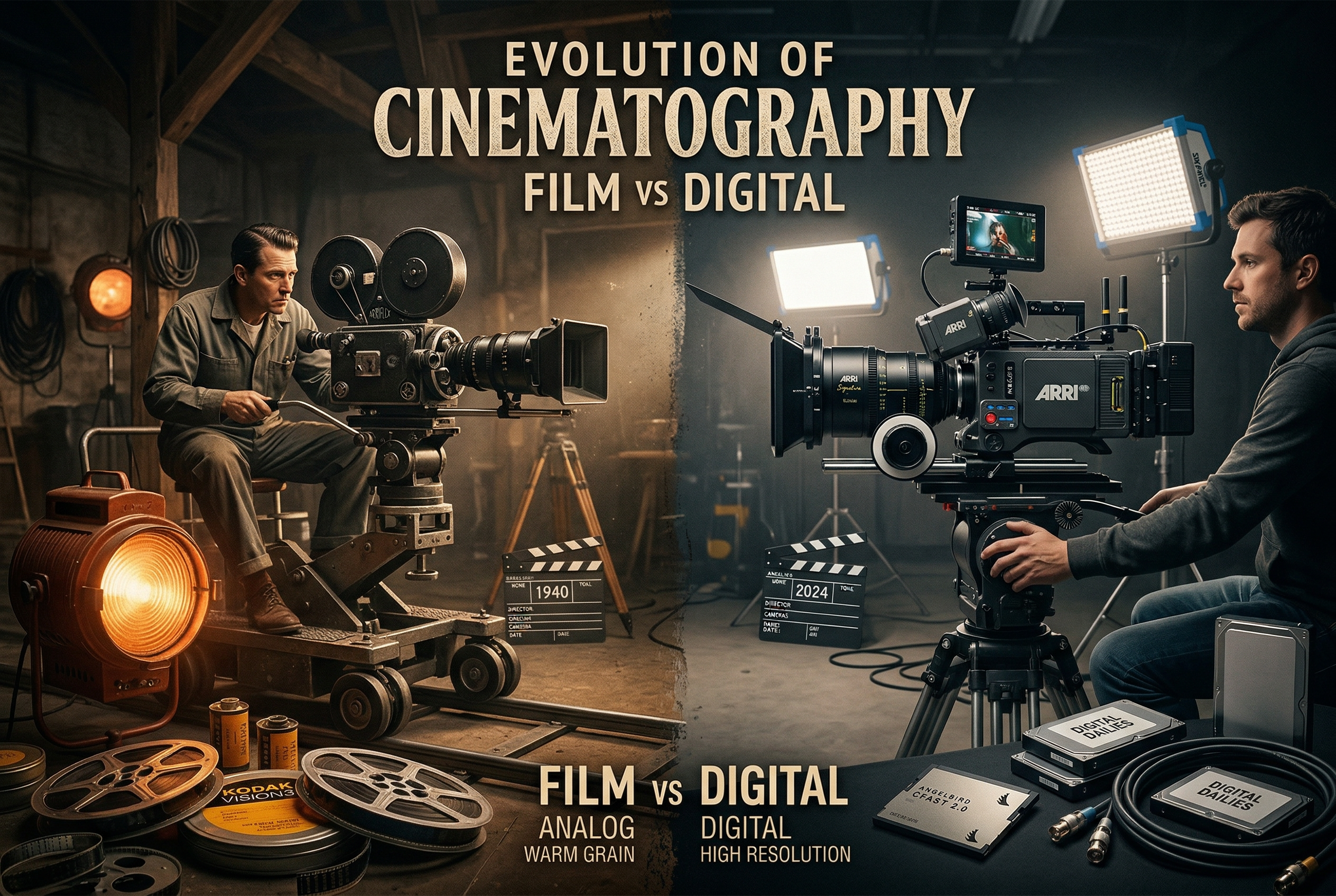
The transition from film to digital capture, which began in earnest in the early 2000s, continues to reshape cinematographic practice. Modern digital cameras offer unprecedented flexibility in terms of sensitivity, dynamic range, and post-production possibilities, but they also require cinematographers to develop new skills and aesthetic sensibilities.
The ability to see images immediately on set, to adjust exposure and color in real-time, and to capture footage in conditions that would have been impossible with film stock has changed the cinematographer’s workflow. However, this technological flexibility also requires greater discipline and aesthetic judgment to avoid endless tweaking and adjustment.
Emerging Voices and New Approaches
While established masters like Deakins continue to push boundaries, a new generation of cinematographers brings fresh perspectives to visual storytelling. These emerging voices often combine traditional cinematographic principles with innovative approaches to technology and narrative structure.
The success of films shot on smartphones and other non-traditional cameras shows that compelling cinematography is more about vision and execution than equipment. Young cinematographers are proving that creativity and storytelling ability matter more than access to the most expensive gear.
The Future of Visual Storytelling
As we look toward the future of cinematography, several trends are emerging that will likely shape the art form in the coming years. Virtual production techniques are becoming more sophisticated, allowing cinematographers to create complex visual environments with unprecedented control over lighting and atmosphere.
Artificial intelligence is beginning to play a role in color correction and image processing, though the creative decisions that define great cinematography remain firmly in human hands. The challenge for future cinematographers will be learning to leverage these new tools while maintaining the artistic vision and emotional intelligence that great visual storytelling requires.
The Enduring Importance of Craft
Despite all the technological changes and new possibilities, the principles of cinematography remain constant. Great cinematographers understand light, composition, movement, and color. They know how to use visual elements to support narrative and emotional goals. They collaborate effectively with directors and other creative professionals to realize a unified artistic vision.
Roger Deakins’ uncertainty about how to define cinematography reflects not confusion but wisdom—the recognition that the art form continues to evolve and that rigid definitions can limit creative possibilities. The best cinematographers remain students of their craft, constantly learning and adapting while maintaining commitment to the core principles of visual storytelling.
The Theatrical Experience
In an era of streaming dominance, cinematographers like Anderson and Bauman are making strong statements about the importance of theatrical presentation. Their decision to revive VistaVision projection represents a belief that certain visual experiences can only be fully appreciated in a cinema environment.
This commitment to theatrical presentation extends beyond format choices to every aspect of image creation. Cinematographers are increasingly conscious of how their work will be viewed and are making creative decisions that optimize the theatrical experience while remaining mindful of other viewing contexts.
Conclusion: The Art Continues
As cinematography continues to evolve in 2026 and beyond, the art form remains as vital and challenging as ever. The combination of established masters like Roger Deakins, innovative collaborations like those between Paul Thomas Anderson and Michael Bauman, and emerging voices from around the world ensures that visual storytelling will continue to push boundaries and surprise audiences.
The future of cinematography lies not in any single technological advancement or aesthetic approach, but in the continued commitment of visual artists to serve story, emotion, and human experience. Whether working with the latest digital cameras or reviving classical film formats, the best cinematographers understand that their ultimate goal remains unchanged: to create images that move, inspire, and illuminate the human condition.
In a world increasingly dominated by quick cuts and social media aesthetics, the patient craft of cinematography offers something irreplaceable—the opportunity to see the world through another’s eyes, to experience beauty and meaning through carefully composed light and shadow, and to participate in the ancient human tradition of storytelling through images. As long as there are stories to tell and audiences to move, cinematography will continue to evolve, adapt, and inspire.