One Battle After Another: Paul Thomas Anderson's Satirical Masterpiece Dissects American Ambition
Anderson's latest film combines his signature visual style with biting social commentary, creating a timely and hilarious epic that ranks among his finest work.
Paul Thomas Anderson’s “One Battle After Another” is his most audacious work yet—a satirical epic that dissects American ambition with surgical precision and sharp wit. This is Anderson at his most confident, using his technical skills to serve a story that feels both timeless and urgently contemporary.
A Return to Form with Fresh Perspective
Following the period piece elegance of “Phantom Thread” and the nostalgic warmth of “Licorice Pizza,” Anderson pivots toward something altogether different with “One Battle After Another.” The film returns to the ensemble storytelling that defined his early masterpieces while incorporating the visual sophistication he’s developed over two decades of filmmaking.
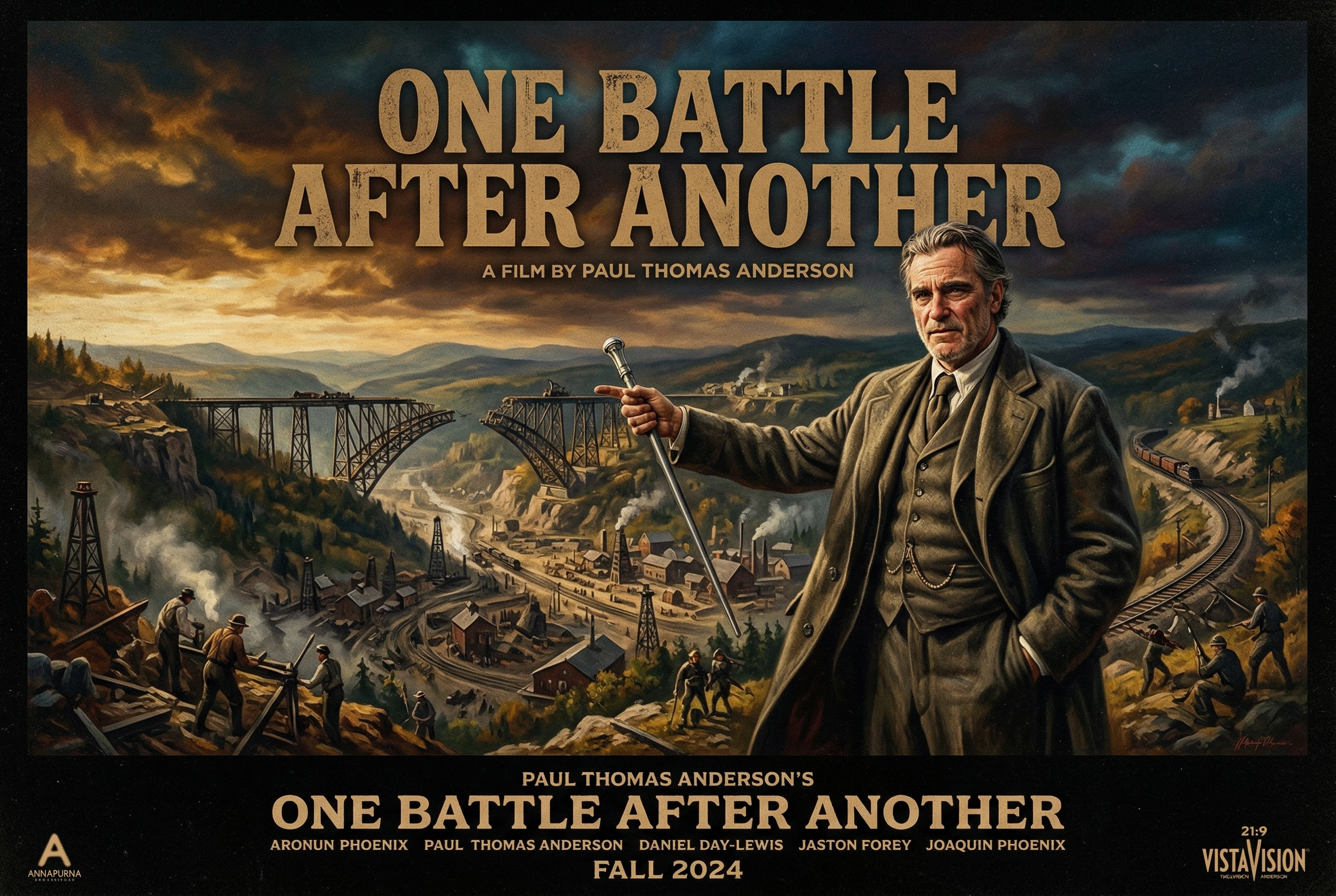
Working once again with cinematographer Michael Bauman—their collaboration continuing to evolve since “Phantom Thread”—Anderson creates a visual language that feels both familiar and revolutionary. Shot on VistaVision and projected in the same format for the first time since Marlon Brando’s “One-Eyed Jacks,” the film demands the largest screen possible, where every frame reveals new layers of meaning and visual poetry.
Technical Mastery in Service of Story
The decision to shoot and project in VistaVision isn’t mere technical showmanship—it serves the film’s thematic concerns about scale, ambition, and the American tendency to make everything bigger. Anderson and Bauman use the expanded frame to create compositions that feel both intimate and epic, often within the same shot. Characters are dwarfed by their environments, yet their personal struggles fill every inch of the screen.
The film’s sound design, presumably crafted with Anderson’s usual meticulous attention to detail, creates an immersive soundscape that pulls viewers into its world. Every conversation, every ambient noise, every musical cue feels precisely calibrated to enhance the emotional and satirical impact of each scene.
Satirical Edge with Emotional Depth
What sets “One Battle After Another” apart from Anderson’s previous work is its satirical bite. While films like “There Will Be Blood” and “The Master” contained elements of dark humor, this latest effort embraces comedy as a primary mode of storytelling. Yet Anderson never allows the satire to undermine the emotional reality of his characters—a delicate balance that few filmmakers can achieve.
The film’s exploration of American ambition feels particularly relevant in 2026, as the country grapples with questions of identity, purpose, and the cost of success. Anderson doesn’t offer easy answers, but he provides a framework for understanding how individual desires intersect with larger cultural forces.
Performance Excellence Across the Board
Anderson has always been exceptional at drawing nuanced performances from his actors, and “One Battle After Another” continues this tradition. The ensemble cast—whose specific members remain part of the film’s carefully guarded mystique—delivers work that feels both naturalistic and heightened, perfectly calibrated to the film’s satirical tone.
Each performance feels lived-in and authentic, even as the characters navigate increasingly absurd situations. This balance between realism and satire is perhaps Anderson’s greatest achievement in the film—creating a world that feels recognizably American while pushing situations to their logical extremes.
Visual Storytelling at Its Finest
Anderson’s visual storytelling has reached new heights of sophistication in “One Battle After Another.” The film’s production design creates environments that feel both specific and archetypal, grounding the satirical elements in recognizable American spaces while imbuing them with symbolic weight.
The costume design and makeup work contribute to this sense of heightened reality, creating characters who feel like real people while also serving as representatives of larger American types. Every visual element serves the film’s thematic concerns, creating a cohesive artistic vision that rewards multiple viewings.
A Timely Meditation on Success and Failure
At its core, “One Battle After Another” is a meditation on what it means to succeed in America, and what that success costs both individuals and society. Anderson explores these themes through multiple storylines that intersect and diverge in unexpected ways, creating a narrative structure that mirrors the complexity of American life itself.
The film’s title proves prophetic—each character faces a series of battles, some literal, others metaphorical, all of them revealing something essential about the American character. Anderson suggests that the very qualities that drive American success—ambition, competitiveness, individualism—also contain the seeds of destruction.
Technical Innovation Serving Artistic Vision
The decision to revive VistaVision projection represents more than nostalgia for classical Hollywood—it’s a statement about the importance of the theatrical experience in an age of streaming dominance. Anderson understands that certain stories demand to be seen communally, on the largest possible canvas, where their full impact can be felt.
This commitment to theatrical presentation extends to every aspect of the film’s construction. The editing, pacing, and structure all assume an audience that will give the film their full attention for its entire runtime—a bold assumption in 2026, but one that pays dividends for viewers willing to engage with Anderson’s vision.
A Career-Defining Achievement
“One Battle After Another” stands as perhaps Anderson’s most complete artistic statement—a film that synthesizes everything he’s learned about filmmaking while pushing into new territory. The satirical elements never feel forced or cynical, but rather emerge naturally from the characters and situations he’s created.
The film’s humor serves its deeper purposes, making its social commentary more palatable while never dulling its edge. Anderson has created a work that can be enjoyed on multiple levels—as pure entertainment, as social satire, and as a meditation on the American experience.
The Broader Context
In the context of Anderson’s filmography, “One Battle After Another” feels like both a culmination and a new beginning. It demonstrates his continued growth as a filmmaker while returning to the ensemble storytelling that first established his reputation. The film proves that Anderson remains one of American cinema’s most vital voices, capable of evolving his style while maintaining his distinctive artistic identity.
The film’s success at the BAFTAs and its strong position in the Oscar race suggest that audiences and critics alike recognize its achievement. In a year filled with strong films, “One Battle After Another” stands out for its unique combination of technical mastery, satirical intelligence, and emotional depth.
Final Verdict
“One Battle After Another” represents Paul Thomas Anderson at the height of his powers—a filmmaker who has mastered every aspect of his craft and uses that mastery in service of a story that matters. The film succeeds as entertainment, as art, and as social commentary, creating an experience that lingers long after the credits roll.
This is essential cinema—the kind of film that reminds us why movies matter and why the theatrical experience remains irreplaceable. Anderson has created a work that speaks to our current moment while transcending it, a satirical epic that finds humor in darkness and meaning in chaos.
In a year of strong films, “One Battle After Another” stands as a towering achievement, confirming Anderson’s position as one of cinema’s most important voices and providing a template for how American filmmakers can address contemporary concerns without sacrificing artistic integrity. It’s a film that demands to be seen, discussed, and revisited—the mark of truly great cinema.