Sinners and the Evolution of Genre Cinema: How Ryan Coogler Redefines Vampire Mythology for Modern Audiences
An in-depth analysis of how Ryan Coogler's vampire epic transcends genre conventions to create a powerful meditation on identity, belonging, and historical trauma.
Ryan Coogler’s “Sinners” is a seismic shift in how contemporary cinema approaches genre filmmaking, particularly the vampire subgenre that has long been dominated by European Gothic traditions and romantic fantasies. With a remarkable 97% critical rating on Rotten Tomatoes, the film shows how a visionary director can take familiar mythological elements and transform them into something entirely new—a work that functions simultaneously as historical drama, social commentary, and supernatural thriller.
Deconstructing the Vampire Myth
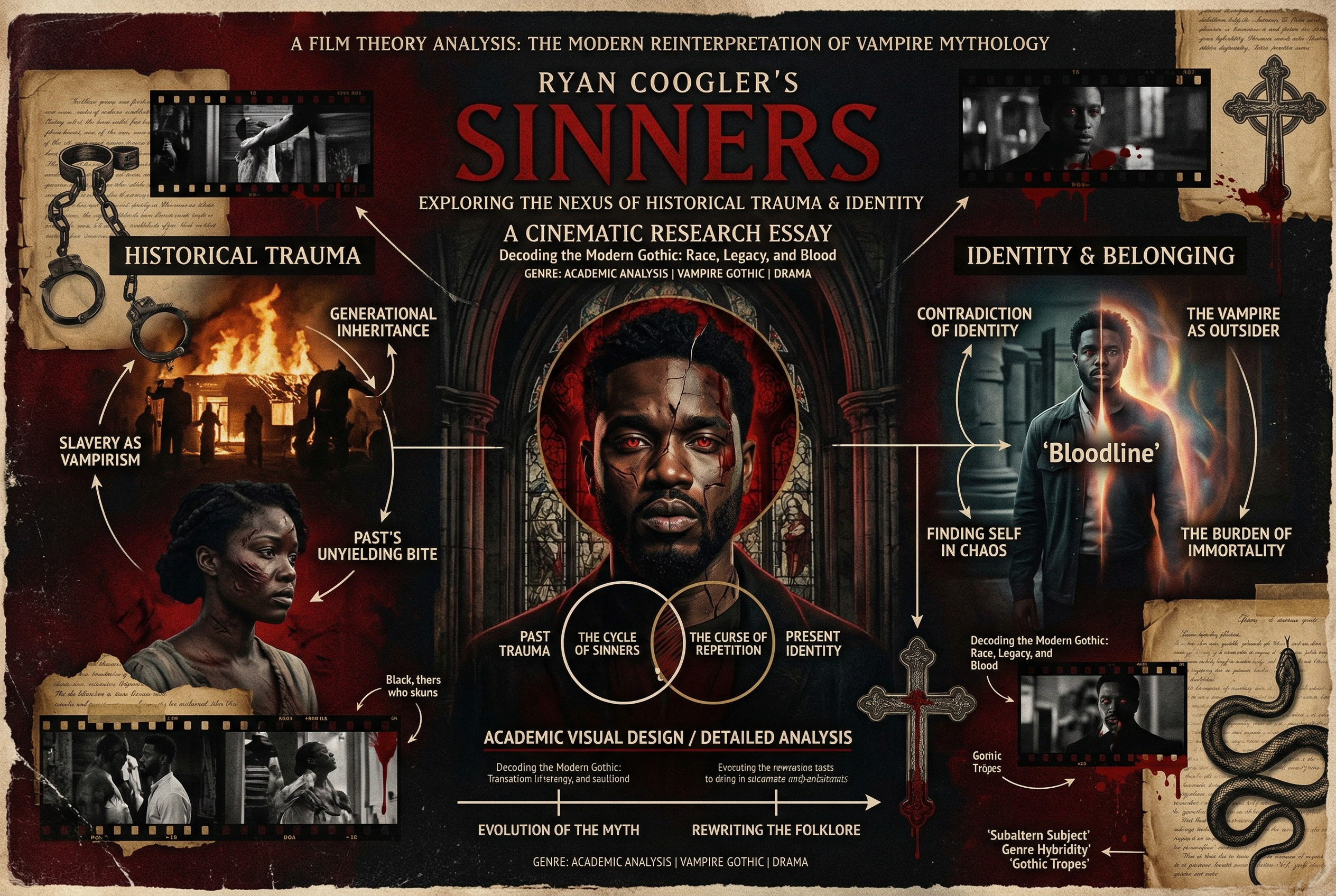
Traditional vampire cinema has been linked to European folklore, from Bram Stoker’s aristocratic Count Dracula to the romantic bloodsuckers of contemporary popular culture. These narratives typically center themes of forbidden desire, eternal damnation, and the tension between civilization and primal hunger. Coogler’s approach to “Sinners” challenges these conventions by relocating vampire mythology within the context of American history and African American experience.
The film’s genius lies not in rejecting vampire tropes entirely, but in interrogating what these mythological elements mean when filtered through different cultural and historical lenses. The concept of beings who exist outside normal society, who are simultaneously powerful and cursed, who must feed on others to survive—these elements take on entirely different meanings when examined through the lens of historical trauma and systemic oppression.
Historical Context as Narrative Foundation
Coogler’s decision to ground “Sinners” in a specific historical period transforms the vampire narrative from escapist fantasy into urgent social commentary. The film uses supernatural elements to explore real historical traumas, creating a work that operates on multiple levels of meaning simultaneously.
This approach recalls the best traditions of genre filmmaking, where supernatural or science fiction elements serve as metaphors for contemporary social issues. Films like George Romero’s “Night of the Living Dead” or Jordan Peele’s “Get Out” show how genre conventions can be repurposed to address racial dynamics and social inequality. “Sinners” continues this tradition while adding layers of historical specificity that give its supernatural elements particular resonance.
The film’s historical grounding also allows Coogler to explore themes of identity and belonging that resonate beyond the vampire genre. Questions of who belongs in American society, who is considered fully human, and how communities form in the face of external threats become central to the narrative in ways that pure fantasy could never achieve.
Visual Language and Atmospheric Design
Coogler’s visual approach to “Sinners” is a masterclass in how production design and cinematography can serve thematic purposes. The film’s aesthetic choices consistently reinforce its thematic concerns, creating a visual language that supports rather than distracts from its deeper meanings.
The film’s use of light and shadow goes beyond the typical vampire movie aesthetic of Gothic darkness. Instead, Coogler and his cinematographer create a visual palette that reflects the historical period while also serving the supernatural elements of the story. The interplay between light and dark becomes a visual metaphor for the characters’ struggles with identity and acceptance.
Similarly, the film’s production design creates environments that feel both historically authentic and mythologically charged. Settings that might appear mundane in a traditional historical drama take on supernatural significance through careful attention to detail and atmospheric design.
Performance and Character Development
The success of “Sinners” rests heavily on its ensemble cast’s ability to navigate the film’s complex tonal requirements. The actors must ground supernatural elements in emotional reality while also conveying the historical weight of their characters’ experiences.
Coogler’s direction allows his performers to find the humanity within the mythological framework, creating characters who feel like real people rather than genre archetypes. This approach is crucial to the film’s success—audiences must believe in these characters as individuals before they can accept them as supernatural beings.
The film’s character development also serves its thematic purposes by showing how supernatural transformation affects different individuals in different ways. Rather than treating vampirism as a uniform condition, “Sinners” explores how this mythological state intersects with each character’s personal history and social position.
Genre Fusion and Narrative Innovation
“Sinners” succeeds because it refuses to be constrained by single-genre expectations. The film operates simultaneously as historical drama, supernatural thriller, and social commentary, creating a work that transcends traditional categorical boundaries.
This genre fusion reflects broader trends in contemporary cinema, where the most successful films often combine elements from multiple genres to create something new. However, “Sinners” goes beyond simple genre mixing to create a work where different generic elements serve unified thematic purposes.
The film’s narrative structure also reflects this innovative approach. Rather than following traditional vampire movie plotting, “Sinners” creates its own narrative logic that serves its specific thematic concerns. This willingness to break genre conventions allows the film to surprise audiences while still delivering the emotional and visceral satisfactions they expect from supernatural cinema.
Cultural Specificity and Universal Themes
One of “Sinners’” greatest achievements is its ability to ground universal themes in culturally specific experiences. The film’s exploration of identity, belonging, and transformation resonates broadly while remaining rooted in particular historical and cultural contexts.
This balance between specificity and universality reflects Coogler’s maturation as a filmmaker. His previous works, including “Black Panther” and “Creed,” showed his ability to create commercially successful films that also addressed serious social themes. “Sinners” is the culmination of this approach, creating a work that functions as both entertainment and artistic statement.
The film’s cultural specificity also serves to expand the vampire genre’s representational possibilities. By centering African American experiences within supernatural narrative frameworks, “Sinners” opens up new possibilities for how these mythological elements can be interpreted and understood.
Technical Achievement in Service of Theme
The technical aspects of “Sinners”—from its cinematography and production design to its sound design and visual effects—all serve the film’s thematic purposes rather than existing as mere spectacle. This integration of technical craft with narrative meaning is sophisticated filmmaking that elevates genre material to artistic significance.
The film’s visual effects are used sparingly and strategically to enhance rather than overwhelm the human drama at the story’s center. When supernatural elements do appear, they feel organic to the world Coogler has created rather than imposed from outside.
Similarly, the film’s sound design creates an immersive atmosphere that supports both the historical and supernatural elements of the story. The careful attention to period-appropriate sounds and music helps ground the film in its historical context while also creating the atmospheric tension that supernatural cinema requires.
Conclusion: A New Standard for Genre Excellence
“Sinners” is a watershed moment in contemporary genre cinema—a film that shows how familiar mythological elements can be transformed into something entirely new through careful attention to cultural context, thematic depth, and technical craft. Ryan Coogler has created a work that honors genre traditions while transcending their limitations.
The film succeeds because it never forgets that great genre cinema must work on multiple levels simultaneously. “Sinners” functions as supernatural thriller, historical drama, and social commentary, creating a work that rewards both casual viewers seeking entertainment and serious film enthusiasts looking for artistic significance.
As genre cinema continues to evolve and gain critical respect, “Sinners” stands as an example of what becomes possible when visionary filmmakers approach familiar material with fresh perspectives and serious artistic intentions. The film doesn’t just redefine vampire mythology—it shows how genre filmmaking can address the most pressing concerns of contemporary society while still delivering the transformative power that makes cinema essential.
In a year filled with exceptional films, “Sinners” distinguishes itself through its unique combination of mythological imagination and social consciousness. It is not just a successful genre film, but a new model for how contemporary cinema can use familiar elements to create something genuinely revolutionary. This is filmmaking that matters—art that entertains, challenges, and ultimately transforms our understanding of what genre cinema can achieve.