The Big Gundown (1966): The Spaghetti Western That Outsmarted Its Own Genre
Sergio Sollima's political western pits Lee Van Cleef against Tomas Milian in a cat-and-mouse game that questions justice, authority, and the American Dream before anyone asked those questions.
Here’s something that still surprises me: the best spaghetti western isn’t one of Sergio Leone’s. Don’t get me wrong—The Good, the Bad and the Ugly is a masterpiece, and Once Upon a Time in the West might be the most beautiful western ever shot. But for sheer intelligence, for political engagement, for the willingness to actually interrogate what these stories mean? Give me Sergio Sollima’s The Big Gundown every time.
I came to this film late, which is probably why it hit me so hard. I’d grown up on Leone, on Clint Eastwood’s silence and Morricone’s scores. I thought I knew what Italian westerns were. Then I watched Lee Van Cleef spend two hours chasing Tomas Milian across the desert, and by the end, I wasn’t sure who the hero was anymore—or if the concept of “hero” meant anything at all.
The Setup: Hunter and Hunted
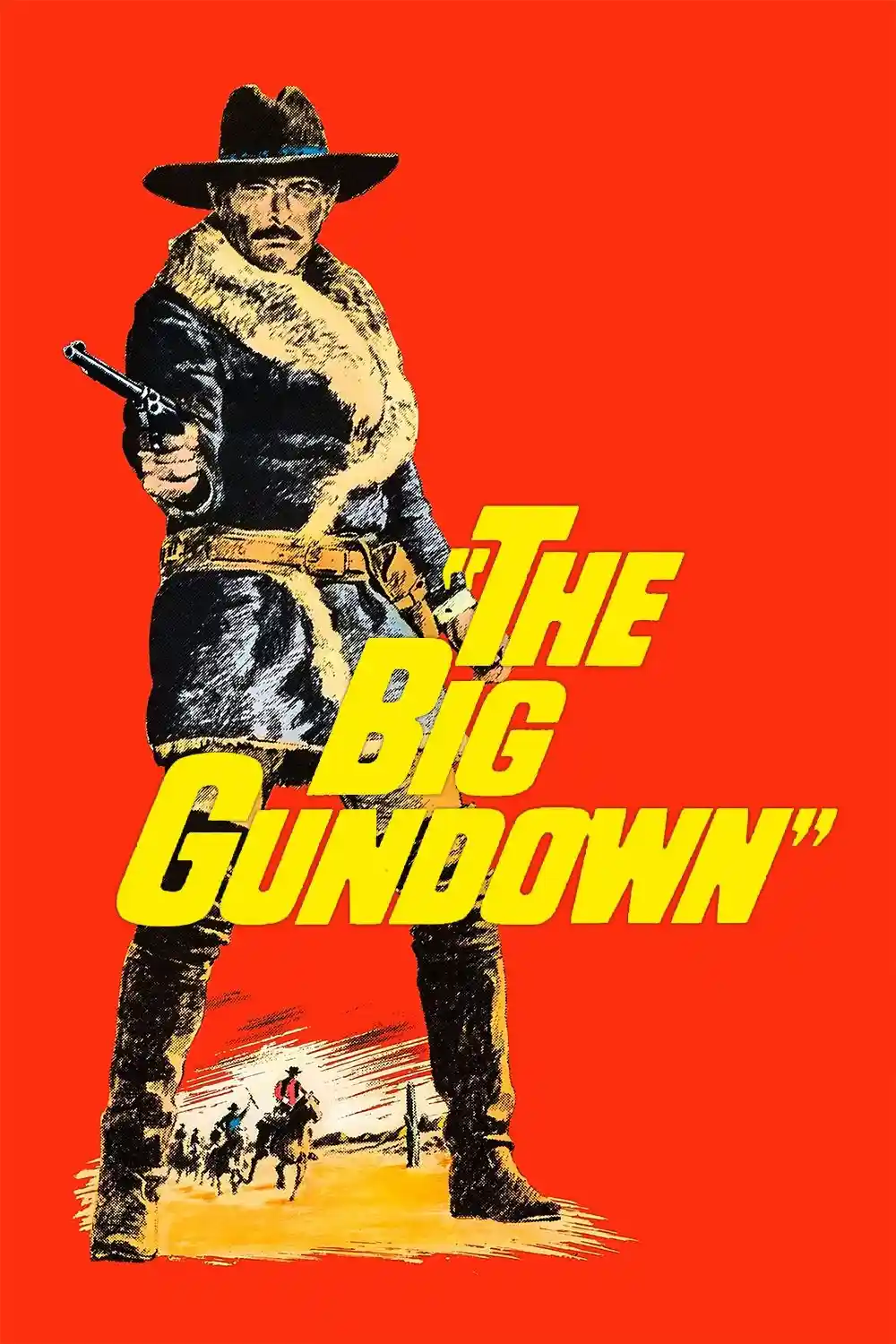
Jonathan Corbett (Van Cleef) is a legendary bounty hunter, the best in the territory. He’s being groomed by a railroad tycoon named Brokston for a political career—they want him respectable, a senator who once cleaned up the West. His final job: capture Cuchillo Sanchez (Milian), a Mexican peasant accused of raping and murdering a twelve-year-old girl.
On paper, this sounds simple. Good man chases bad man. Justice prevails. Roll credits.
But Sollima and his screenwriters (Sergio Donati and Fernando Morandi) aren’t interested in simple. They’re interested in asking uncomfortable questions:
- What if the accused is innocent?
- What if the accuser is guilty?
- What if justice is just another name for power?
- What if the law serves the lawless?
From the first scene, these questions haunt the narrative. Corbett is competent, professional, seemingly moral. Cuchillo is slippery, charismatic, clearly intelligent. Every time Corbett catches him (and he catches him multiple times), something happens to let Cuchillo escape—and each escape reveals more of the truth Corbett doesn’t want to see.
Van Cleef: Beyond the Villain
By 1966, Lee Van Cleef had been typecast as a heavy for years. His angular face and cold eyes made him perfect for villains, and Leone had used him brilliantly as the ruthless Angel Eyes in The Good, the Bad and the Ugly. But Sollima saw something else in him: authority.
Van Cleef’s Corbett isn’t evil. That’s what makes him so fascinating. He’s a man who believes in the system—in law, in order, in the promise of civilization. He hunts criminals because he genuinely thinks he’s making the world better. When he realizes the system has used him, that his entire career has been in service of people far worse than the men he hunted, his face doesn’t show anger. It shows something worse: confusion.
Performance Analysis:
| Scene | Corbett’s Expression | Internal Reality |
|---|---|---|
| Accepting the job | Confident, controlled | Believes in his mission |
| First capture of Cuchillo | Professional satisfaction | Beginning to sense doubt |
| Discovering Brokston’s corruption | Stoic denial | Cannot process betrayal |
| Final confrontation | Empty, exhausted | System has consumed him |
There’s a moment near the end where Corbett realizes everything he’s done—every man he’s killed or captured—has been at the direction of people who simply wanted obstacles removed. Van Cleef plays this realization without melodrama. Just a slight sag in his shoulders. The weight of a lifetime’s complicity landing all at once.
Tomas Milian: The Revolution Embodied
If Van Cleef represents order, Milian’s Cuchillo represents everything order cannot contain. He’s a trickster figure, a survivor, a man who uses the only weapons available to the powerless: wit, speed, and the willingness to fight dirty.
Milian was Cuban by birth, and he brought to Cuchillo a sense of Latin American revolutionary consciousness that most Italian westerns lacked. This isn’t a simple “noble savage” archetype—Cuchillo is crude, often vulgar, occasionally cruel. But he’s also politically aware in ways Corbett isn’t. He knows who really runs things. He knows the game is rigged.
Watch the scene where Cuchillo explains to Corbett why he keeps running even though it makes him look guilty. “I was born guilty,” he says. “Mexican. Poor. That’s two death sentences already.” The line could feel heavy-handed, but Milian delivers it with a grin that makes it worse. He’s not asking for sympathy. He’s stating facts.
The cat-and-mouse dynamic between the two leads is genuinely thrilling. Sollima stages their encounters as elaborate games, each man learning from the other, adapting, escalating. By the final act, they’ve developed a grudging respect that’s more interesting than friendship would be.
Morricone’s Best Non-Leone Score
Ennio Morricone scored so many films that it’s easy to take him for granted. But his work on The Big Gundown deserves special attention. This might be his most underrated composition.
The main theme is immediately recognizable—that whistling motif, the driving rhythm, the sense of pursuit encoded in the music itself. But listen closer to how Morricone varies the theme throughout the film:
Opening: Triumphant, confident. This is Corbett’s theme, the theme of law and order.
Chase sequences: The same melody, but faster, more frantic. The order is starting to crack.
Revelation scenes: The theme fragments, becomes discordant. The melody we associated with justice now sounds hollow.
Finale: The theme returns, but transposed into a minor key. Victory, if this is victory, tastes like ash.
Morricone understood what Sollima was doing and scored it accordingly. The music doesn’t just accompany the narrative—it deconstructs it.
Political Subtext (That’s Really Just Text)
Let’s be direct: The Big Gundown is a Marxist western. The bad guys aren’t bandits or outlaws—they’re capitalists. Brokston and his associates represent American imperialism, using “civilization” as cover for exploitation. The railroad they’re building (railroads in westerns are almost always coded as capitalism) will make them rich by displacing indigenous peoples and poor settlers alike.
Corbett is their tool—the violence that protects capital disguised as the law that protects citizens. When he finally sees this, he doesn’t become a revolutionary. He just stops. He can’t unsee what he’s seen, but he also can’t fully break from the system that made him.
This might be the most realistic political trajectory in any western. Most films would give us a conversion, a hero reborn fighting for the right side. Sollima knows that’s fantasy. Systems don’t fall because one man changes his mind. Corbett’s awakening is personal, not structural. The railroad will still get built.
The Italian Context:
Sollima was part of the Italian political left during a period of intense ideological conflict. Italy in the 1960s was reckoning with its fascist past while also watching American cold war intervention across the globe. The spaghetti western became, for directors like Sollima, a way to comment on American mythology without the censorship risks of contemporary settings.
When Cuchillo talks about “rich men in big houses deciding who lives and dies,” Italian audiences knew he wasn’t just talking about 1880s Texas.
The Violence Question
Spaghetti westerns are known for stylized violence, and The Big Gundown delivers plenty of it. But there’s a crucial difference in how Sollima frames gunfights compared to Leone.
In Leone’s films, violence is operatic—grand, beautiful, almost transcendent. The Mexican standoff is an art form. In The Big Gundown, violence is ugly and functional. Men die quickly, messily, without glory. The camera doesn’t linger on the poetry of death.
This is intentional. Sollima doesn’t want you to enjoy the killing. He wants you to see it for what it is: the enforcement mechanism of an unjust system. Every body that drops is evidence of something rotten, not something heroic.
The one exception is Cuchillo’s knife work. When he fights with his blade, there’s an elegance to it—but it’s the elegance of desperation, of a man who couldn’t afford a gun learning to survive anyway. Even this “skill” is a product of inequality.
The Rape That Didn’t Happen
⚠️ Spoiler Warning: Major plot revelation follows.
The entire hunt is premised on a lie. Cuchillo didn’t rape anyone. The actual perpetrator is—of course—connected to the wealthy men who set Corbett on Cuchillo’s trail. The accusation wasn’t about justice; it was about eliminating someone inconvenient and reinforcing the myth that Mexican men are sexual predators who threaten white innocence.
This twist might seem obvious now, but in 1966 it was genuinely subversive. The film doesn’t just exonerate Cuchillo; it indicts the entire apparatus that convicted him without trial. The racism of the accusation, the classism of the assumption, the convenience of the scapegoat—Sollima lays it all bare.
And then he does something even more interesting: he doesn’t give Corbett a clean redemption. Yes, Corbett ultimately helps Cuchillo. But he does so as a broken man, not a transformed one. There’s no triumphant final speech, no declaration of new principles. Just two men who know too much to go back to being what they were.
Why This Film Isn’t More Famous
The Big Gundown was successful in Europe but never achieved the same American cultural penetration as Leone’s Dollars trilogy. Several factors contributed:
-
Distribution: The film was released in various edited versions, some significantly cut. American audiences may have seen incomplete films.
-
Timing: By 1966, the spaghetti western boom was in full swing. There was simply too much competition.
-
Complexity: Leone’s films have complex themes, but simple pleasures. The Big Gundown requires more from its audience.
-
Star Power: Van Cleef was well-known but not Eastwood. Milian was largely unknown to American audiences.
The film has been rediscovered in recent decades, with restored versions and critical reassessment. But it still doesn’t have the cultural footprint it deserves.
Technical Craft
A few elements worth noting:
Widescreen composition: Sollima uses the scope frame masterfully, often placing characters at extreme edges to emphasize distance and tension.
Spanish locations: Shot in Almería, the same Spanish desert that served Leone, but Sollima finds different vistas—rockier, more claustrophobic in places.
Editing rhythm: The chase sequences are cut faster than typical spaghetti westerns, creating genuine momentum.
Practical effects: The stunt work is excellent, with several genuinely dangerous-looking sequences.
My Rating: 9/10
What works:
- Van Cleef’s best lead performance
- Milian creates an unforgettable character
- Political themes are woven in, not grafted on
- Morricone’s score is phenomenal
- Genuine tension throughout
What doesn’t:
- Some pacing issues in the middle act
- A few supporting performances are weak
- The dubbed English version loses some nuance
- Ending might feel unresolved to some viewers
If You Liked This, Try:
- Face to Face (1967) — Sollima’s follow-up, even more politically explicit
- A Bullet for the General (1967) — Damiano Damiani’s revolutionary western
- Django (1966) — Corbucci’s darker, grungier take on the genre
- Death Rides a Horse (1967) — Another Van Cleef vehicle, less political but well-crafted
The Big Gundown remains essential viewing for anyone who thinks they understand westerns. It’s a film that loves the genre enough to interrogate it, that respects its audience enough to demand engagement. Jonathan Corbett rode into this story believing he was the hero. He rode out knowing heroes are just the stories power tells about its enforcers.
Cuchillo is still running somewhere. He’ll always be running. Because for people like him, the chase never ends—it just changes hunters.
References
- Hughes, Howard. “Sergio Sollima’s Political Westerns,” Spaghetti Westerns, Pocket Essentials, 2010
- Frayling, Christopher. Spaghetti Westerns: Cowboys and Europeans from Karl May to Sergio Leone, I.B. Tauris, 2006
- Curti, Roberto. Italian Crime Filmography, 1968-1980, McFarland, 2013
- “Three Bullets, Three Dead Men: Sergio Sollima’s The Big Gundown,” Senses of Cinema, 2018
- Morricone, Ennio. Interview, Soundtrack Magazine, 1995
- Spaghetti Western Database (spaghetti-western.net), film entry and production notes