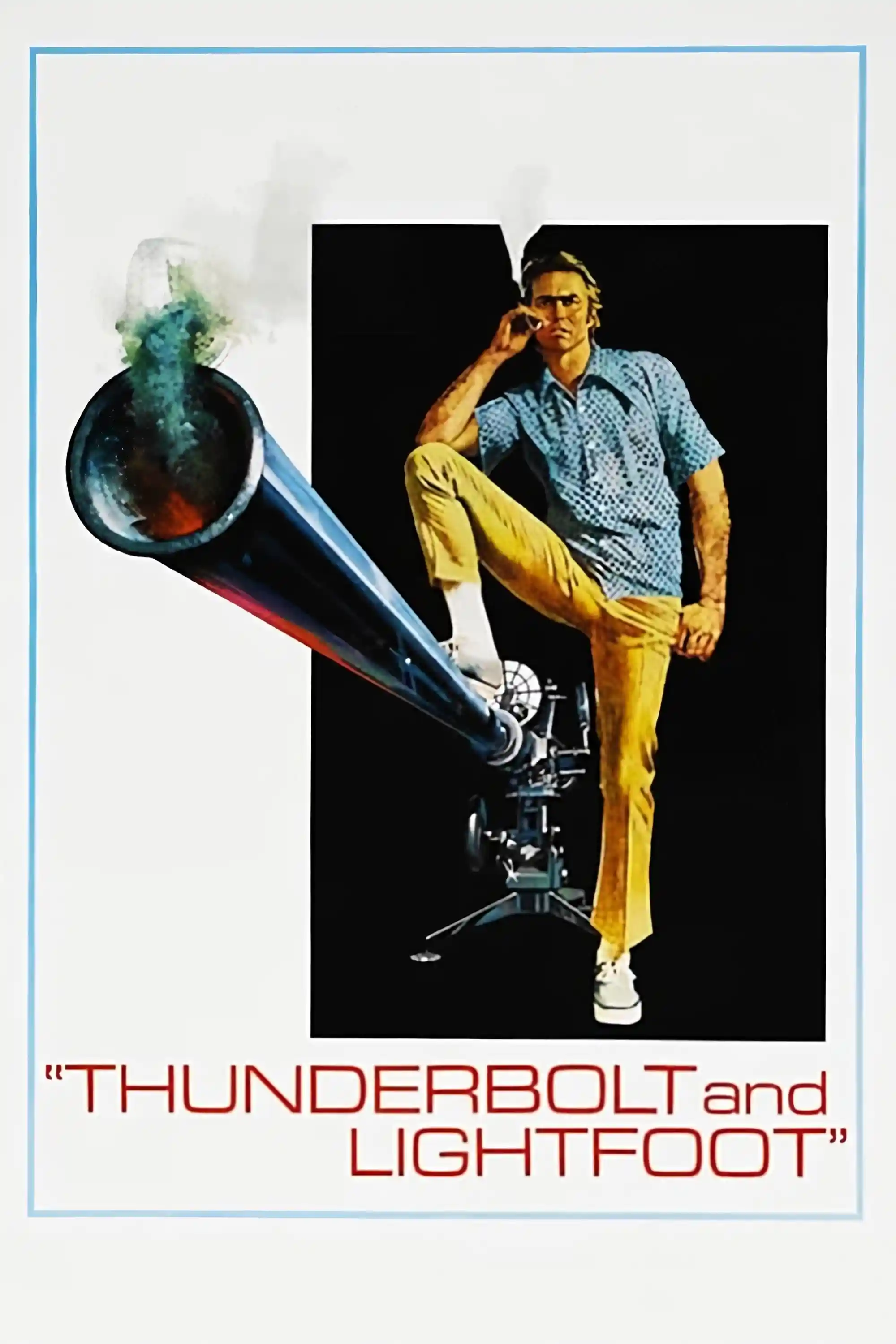
Thunderbolt and Lightfoot (1974): Michael Cimino's Debut and the Last American Innocence
Before The Deer Hunter, Cimino made this buddy heist film with Clint Eastwood and Jeff Bridges. It's funnier, sadder, and stranger than you expect—a meditation on masculinity disguised as a caper.
Jeff Bridges in a dress. That’s the image from Thunderbolt and Lightfoot that stays with me—the future Academy Award winner, young and beautiful, wearing women’s clothes to infiltrate a target, and somehow making it work. He’s charming. He’s funny. He’s doomed.
Michael Cimino’s debut film is usually categorized as a heist movie or a buddy comedy. It’s both those things, but it’s also something stranger: an elegy for American masculinity, a love story between two men who can’t quite say what they mean, and a meditation on what happens when the frontier closes.
The Setup: Old Thief, Young Drifter
Thunderbolt (Clint Eastwood) is hiding out as a preacher in rural Montana when his past catches up with him—former partners who think he stole their share from a heist years ago. Fleeing from gunfire, he’s picked up by Lightfoot (Jeff Bridges), a young drifter who steals cars for fun and lives by charm.
They become partners, then friends, then something harder to define. When Thunderbolt’s old crew catches up and demands he recreate the original heist, Lightfoot insists on joining. The money doesn’t matter to him; being part of something does.
Bridges and Eastwood: Unexpected Chemistry
On paper, this pairing shouldn’t work. Eastwood was already an icon—the Man with No Name, Dirty Harry, the strong silent type. Bridges was 24, all energy and improvisation, a generation younger in every sense.
But Cimino found something between them. Eastwood’s Thunderbolt is exhausted, not cool—a man who’s been running so long he’s forgotten why. Bridges’ Lightfoot is desperately alive, clinging to experience, sensing his time is limited. They complement each other in ways neither expects.
| Thunderbolt | Lightfoot |
|---|---|
| Experienced | Innocent |
| Tired | Energetic |
| Running from past | Seeking future |
| Closed off | Open |
| Survives | Doesn’t |
The relationship hovers at the edge of romance without ever quite landing there. Lightfoot’s admiration for Thunderbolt is obvious. Thunderbolt’s gruff affection is harder to read. Cimino lets the ambiguity stand.
The Supporting Cast: Old Partners
George Kennedy and Geoffrey Lewis play Red and Eddie, Thunderbolt’s former partners. They’re the film’s antagonists initially, but they become reluctant allies when the heist opportunity reappears.
Kennedy, especially, is memorable—a violent man nursing grudges, unable to let go of the past. His confrontations with Lightfoot crackle with generational tension: the young man’s casual confidence infuriates a man who’s spent his life proving himself through brutality.
Montana: The Dying West
Cimino shot Thunderbolt and Lightfoot in Montana and Idaho, capturing landscapes of stunning beauty—mountains, rivers, endless sky. But this isn’t the triumphant West of John Ford. It’s the used-up West, the West of highways and strip malls encroaching on wilderness.
The heist target is symbolic: a one-room schoolhouse that’s been moved to make way for a new building. The old Montana is literally being relocated, made obsolete. Thunderbolt and his crew are relics of a criminal past that no longer quite fits the modern landscape.
Cimino would explore similar themes in The Deer Hunter and Heaven’s Gate—the conflict between American myth and American reality, the impossibility of maintaining innocence. Here, it’s in embryo form.
The Heist: Competent and Doomed
The heist itself is well-constructed—a classic caper with disguises, timing, and split-second decisions. It even succeeds, technically. They get the money.
But the escape goes wrong. There’s violence, pursuit, loss. The money is abandoned. Thunderbolt survives. Lightfoot doesn’t—not immediately, but the injuries he sustains prove fatal.
This is the film’s devastating turn. For most of its runtime, Thunderbolt and Lightfoot plays like a romp—two charming rogues on an adventure. The ending reframes everything. Lightfoot was always dying. His energy was terminal. His attachment to Thunderbolt was a doomed man seeking connection.
The Final Scene: American Grief
⚠️ Spoiler Warning: Full discussion of the ending follows.
The final scene shows Thunderbolt and Lightfoot driving through Montana. Lightfoot is deteriorating—his head wound from the escape is killing him. They’ve recovered some money, hidden in a place only they knew. They could go anywhere.
“I don’t think I can make it,” Lightfoot says.
And he dies. In the car. While Thunderbolt drives. No final words, no dramatic goodbye—just a young man slipping away while his friend watches.
Eastwood’s face in this scene is extraordinary. This is not Dirty Harry stoicism. This is grief, real grief, for a man he’s known for only a few weeks but who somehow became essential.
The film ends on Thunderbolt’s face, still driving, alone now. The money means nothing. The adventure means nothing. All that’s left is loss.
Bridges’ Oscar-Nominated Performance
Bridges received his first Academy Award nomination for Thunderbolt and Lightfoot, and it’s richly deserved. Lightfoot is a creation of pure charisma—funny, sexy, reckless, vulnerable.
The dress scene is famous, but watch the smaller moments: Lightfoot’s face when Thunderbolt finally accepts him, his desperation during the heist, his slow fade in the final act. Bridges was already a great actor at 24, finding depths that the script only suggested.
My Rating: 8/10
What works:
- Bridges and Eastwood’s unexpected chemistry
- Montana locations are gorgeous and melancholy
- The tonal shift in the final act devastates
- Cimino’s direction already shows mastery
- George Kennedy is effectively menacing
What doesn’t:
- Pacing in the middle section drags
- Some 70s attitudes toward women have dated
- The heist itself is less interesting than the relationships
If You Liked This, Try:
- The Deer Hunter (1978) — Cimino’s masterpiece about masculine friendship
- Scarecrow (1973) — Hackman and Pacino in another road/buddy film
- Midnight Cowboy (1969) — Male friendship unto death
- The Friends of Eddie Coyle (1973) — Another aging criminal in a changing world
- Hell or High Water (2016) — Modern Texas heist with similar themes
Thunderbolt and Lightfoot is the film Michael Cimino made before he was allowed to be ambitious. It’s small, personal, and ultimately heartbreaking—a buddy movie that ends in loss, a heist film where the money doesn’t matter, a Western where the West is already over.
Lightfoot dies and Thunderbolt keeps driving. That’s America: always moving, never arriving, leaving our friends behind on the road.
References
- Cimino, Michael. Interviews, American Film Institute seminars
- Bach, Steven. Final Cut: Dreams and Disaster in the Making of Heaven’s Gate, William Morrow, 1985
- Variety staff. Original review, 1974
- Canby, Vincent. Review, New York Times, 1974
- Bridges, Jeff. Academy Award nomination records, 1975